What is the Best Cat Harness?
Table of Contents
Introduction
When I am out walking my cat on a harness and leash, I am well aware that this is not exactly the most widely accepted practice. However, knowing the benefit of having my cat experience the outdoors in a safe manner certainly outweighs the slightly awkward glances I get from my neighbors.
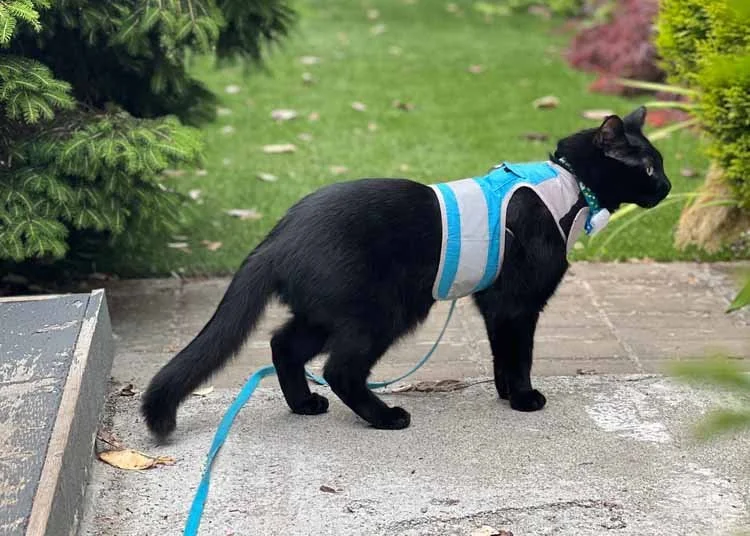
For the most part, people’s responses have been quite positive. I get lots of comments about how cute Jones is all suited up in a harness that matches his eye colour, which is usually followed by people asking me where to get a harness for their own furry feline.
Here I will discuss many of the important considerations when choosing the the best cat harness. Because the harness is responsible for keeping your cat safe and secure, this is arguably the most important piece of equipment on your adventure cat.
Not All Cat Harnesses Keep Your Cat Safe
Not only must a cat not be able to slither their way out of the harness, but harnesses also need to be strong enough to withstand a sudden jolt when your cat darts towards something. Before I got smart about harness selection, I had a few experiences where I was left holding a leash and harness with no cat. Luckily it was early in the morning and my cat, Jones, just darted home. However, these experiences highlighted the fact that not all cat harnesses are created equally.
The first harness I put on Jones was one with thin nylon straps. This is generally the most common one you find at pet stores. But Jones was able to easily maneuver his slender body out of the flimsy straps. Jones is a nervous kitty and has been known to spook at a thing or two. Based on my experiences, I highly recommend you avoid any harness that is of the thin-strapped variety.
A Vest Harness is Best
If you are shopping at a local pet store, choose a harness that covers much more of the cat’s body, such as a vest. The harness that I used for Jones (made by RCpets) is a soft nylon material that is fastened by velcro and fits more like a little vest. It covers a lot more of Jones’ body than the previous harness, making it difficult (but not impossible!) to pull out of. Jones has had a few panicky moments where he has tugged so hard at the leash that one of his legs pulled through the front.
It is also worth mentioning that these harnesses may be designed for dogs; however, they are perfectly acceptable for cats to wear as long as they are fitted properly – a good rule is for the harness to be snug, but you should be able to fit one or two fingers in between the harness and your cat’s fur.
Think Holster, Not Harness
While I feel comfortable with Jones wearing a vest for short outings in our yard and around the neighbourhood, I would want even more security before adventuring further from home. All jokes aside, the right gear matters, especially if your cat is new to outdoor exploration.
In general, harnesses that provide more body coverage may offer a more secure fit than very minimal designs. The goal is to choose something snug, comfortable, and difficult for your cat to slip out of, while still allowing natural movement. Take your time, test the fit indoors first, and make sure your cat is relaxed and confident before heading outside.
Want to join our community and learn more?
Check out our training programs at The Cat School and take the first step in unlocking your cat’s full potential!
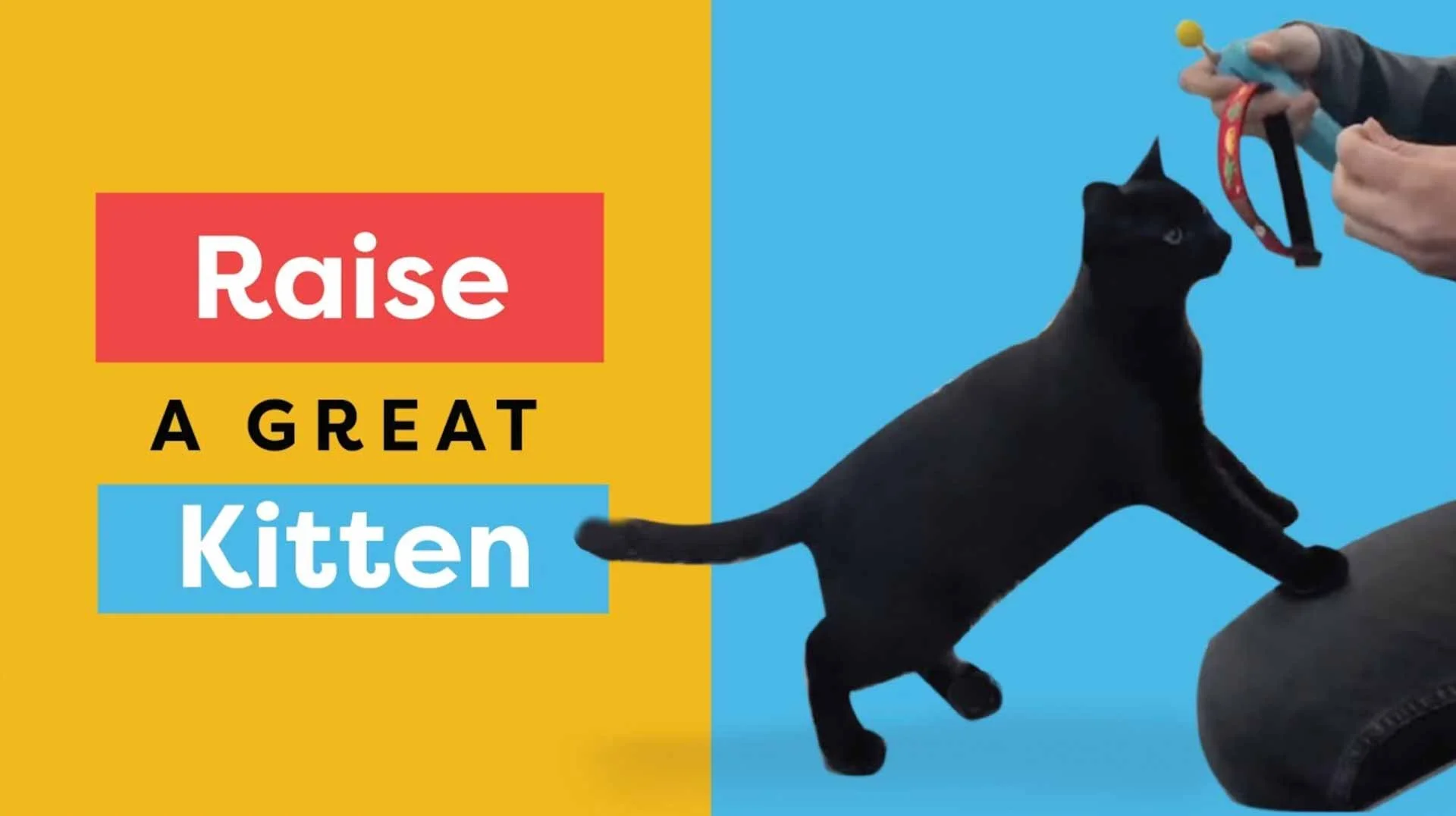
Learn the 9 kitten training foundations that help raise a confident, well-adjusted cat, from handling and clicker training to carrier training, cooperative care, and travel prep
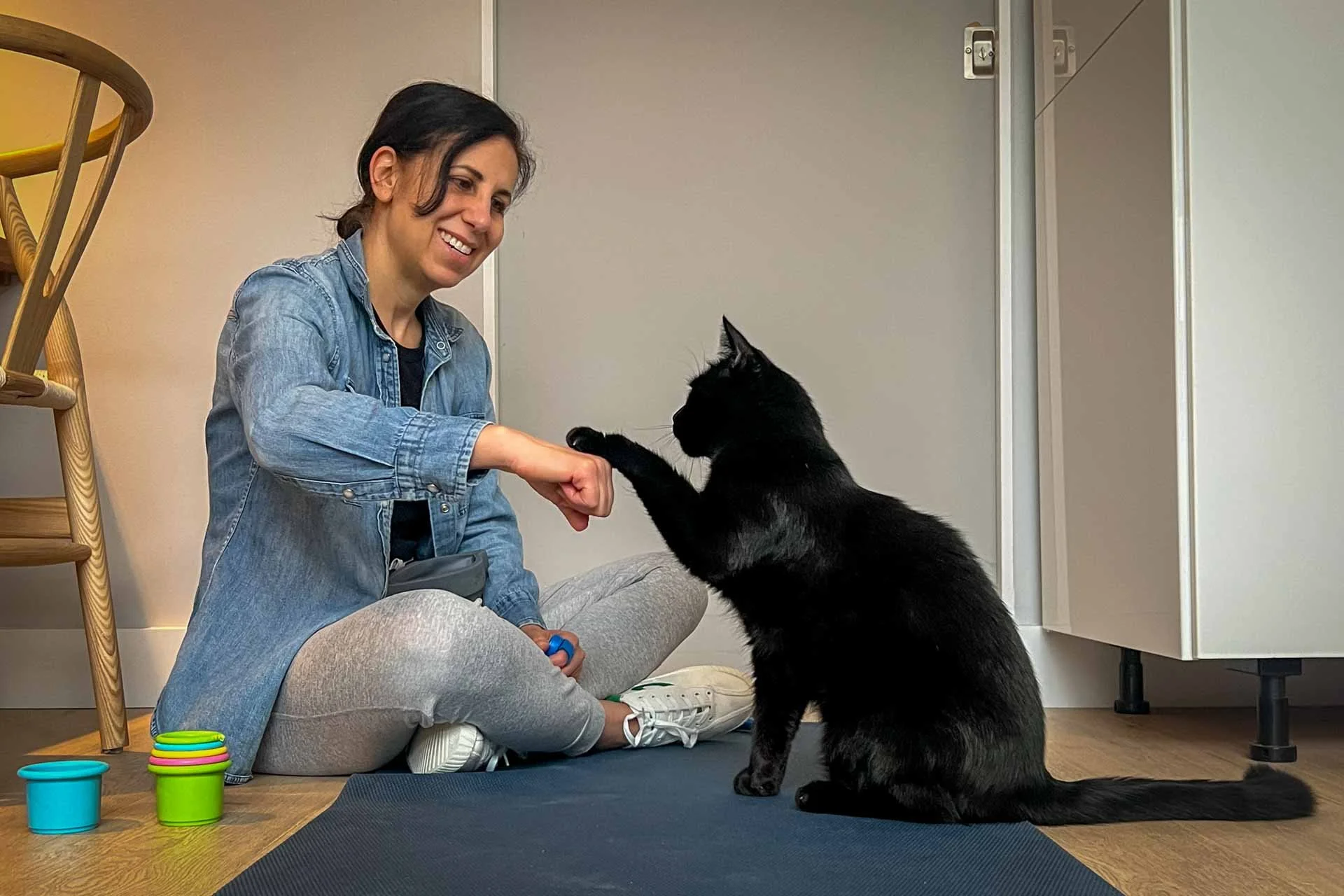
Learn how to clicker train your cat by teaching one simple trick: a fist bump. In this beginner-friendly lesson from Cat School, you’ll discover the equipment you need, how to use a clicker correctly, and the step-by-step method that helps cats learn quickly and confidently.
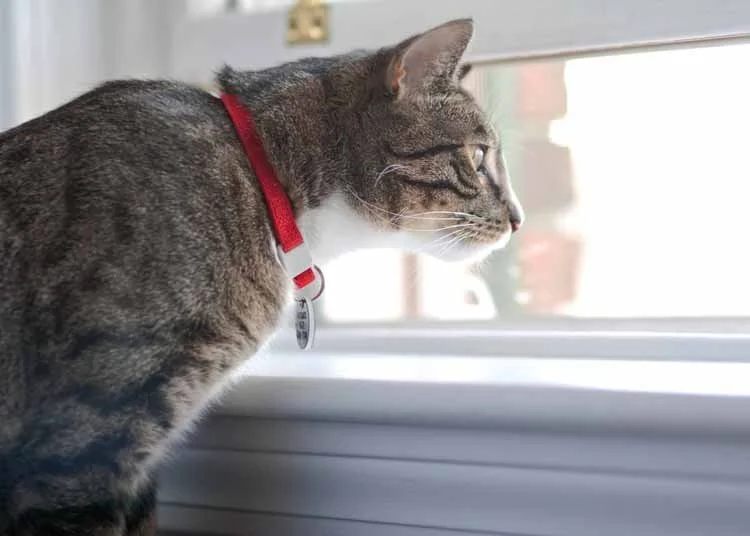
Wearing a collar is an essential skill for all cats. Cat collar training is important for, outdoor cats…
At The Cat School, we emphasize the power of positive reinforcement training to improve feline behavior, and the best ways to train a cat by strengthening the human-cat bond, and enhance overall well-being.
But why do people train their cats?
Wanting to stop unwanted cat behavior is a common need.
Do you have a problem with your cat biting and scratching your hand when you are training? A persistent cat’s sharp claws and teeth can quickly ruin the fun in a training session.
When I am out walking my cat on a harness and leash, I am well aware that this is not exactly the most widely accepted practice. However, knowing the benefit of having my cat experience the outdoors in a safe manner certainly outweighs the slightly awkward glances I get from my neighbors.
We know that keeping cats indoors increases their safety and lifespan, but it does come at a cost: many indoor cats don’t get the mental and physical stimulation they need.
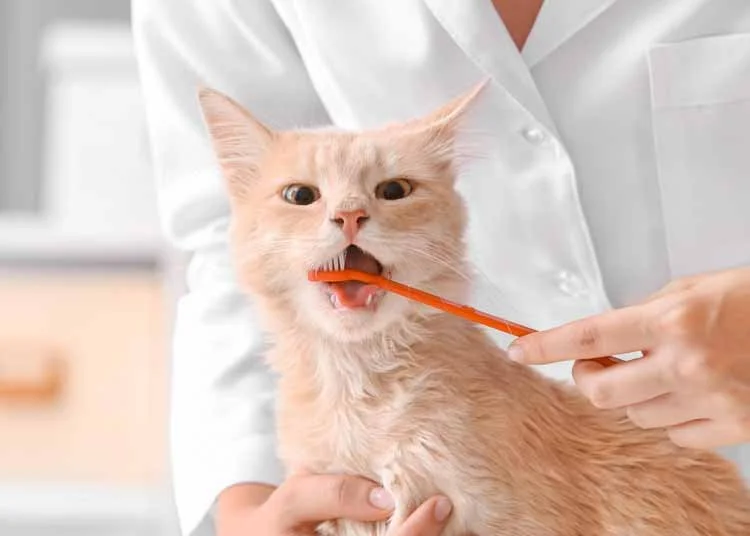
The thought of brushing a cat’s teeth may seem daunting and impossible, but it is an important part of maintaining your cat’s health. Periodontal disease is a significant problem in domestic cats.
Congratulations on your new kitten! You’ve brought them to their new home and are eagerly wondering what your next steps are. While you may be excited to jump right into clicker training, socializing your kitten should be the main focus.
As a cat guardian, you’ve likely wondered, “Do cats need nail trims?” And “If cat nail trims are necessary, how do you trim a cat’s nails?” Maybe you’ve even tried clipping those claws before but have yet to succeed or it was a stressful experience for everyone involved.
So you’ve decided to start cat training, but maybe you aren’t sure which tricks to teach your cat to get started. With so many directions to go in, it can be overwhelming knowing where to start.
How amazing would it be if talking with cats was as easy as talking with other humans? Any cat owner will tell you how much they wish their cats could talk.
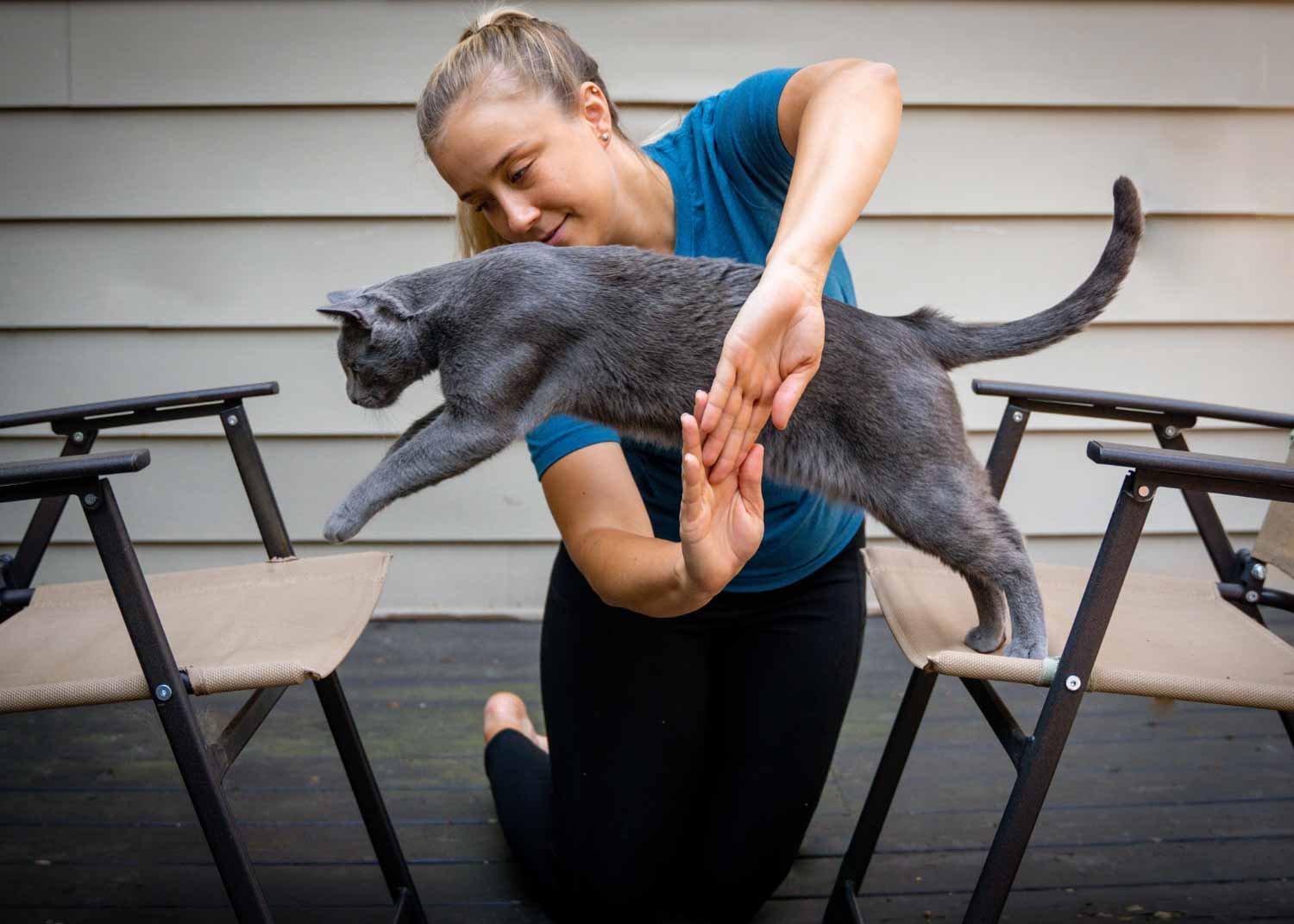
If you’re looking for a fun and easy trick to teach your cat, the cat fist bump is perfect! Since creating this cat fist bump tutorial, hundreds of cats have learned to perform this trick using our method. We know your cat can learn too. Let’s start training!
f you’re wondering “Is my cat trainable?” you are not alone! The biggest hesitation that keeps people from signing up for Cat School is the thought that their cat can’t be trained. Cats have been branded to be independent, aloof, unwilling to learn.
Every Cat School student wants to know which food reward is best for clicker training their cat. The answer is…
Ready to start clicker training your cat? Along with your cat’s favorite treat, you’ll need a clicker and a target stick. They are both versatile training aids that serve many purposes.
When it comes to cat training, a couple common questions include, “What do I do if my cat doesn’t like treats?” and “How do I train my cat if they aren’t foot motivated?”
If you watch me train my cat Jones, you’ve probably noticed that when he gets a behaviour correct, I often throw the treat away, so he has to find it. Why I throw treats during our training sessions is one of the most common questions I get asked.
Your cat’s “spot” can be a mat, blanket, or cat bed. You want something that is easily portable and can be moved around different areas of your home. I personally just use my laptop case.
If you are one who has always thought cats were untrainable, you might be wondering why you would ever start clicker training a cat! Contrary to popular belief, cats are actually quite trainable and make very willing students. Clicker training cats is all the rage now and you don’t want your cat to miss out.
Oftentimes people hear the words “cat training” and think there’s no way they’d be able to train their cat. The truth is that cats CAN be trained, and it’s quite easy to get started. Some might say it’s even easier than training dogs!
Wearing a collar is an essential skill for all cats. Read more to find out why cat collar training is important.
Have you heard?! Clicker training cats is all the rage! Why? Because it is a fun and engaging activity that provides both physical and mental stimulation for your cat!
Julie Posluns is a cat trainer and behaviourist who founded Cat School to make training fun, effective, and easy for cat parents everywhere.