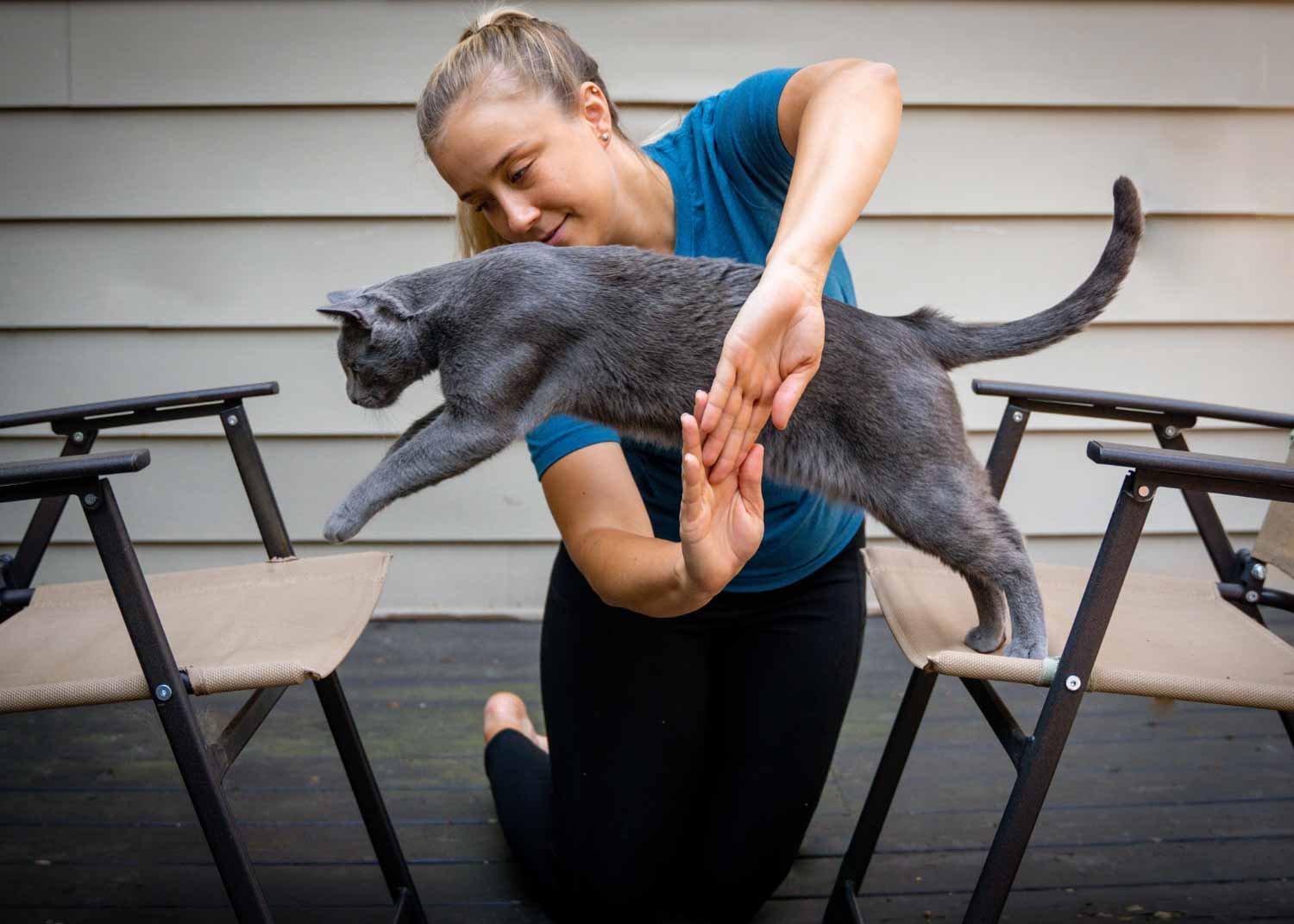
Kitten Training 101: 9 Foundations for Raising a Confident, Happy Kitten
If you’ve just brought home a kitten, or you’re about to, you’re probably excited and maybe a little overwhelmed.
There’s a lot to learn in those early weeks. The way a kitten is raised, handled, and introduced to new experiences can affect their confidence for life. This includes meeting people, preparing for travel, wearing equipment, being handled, and learning simple training skills.
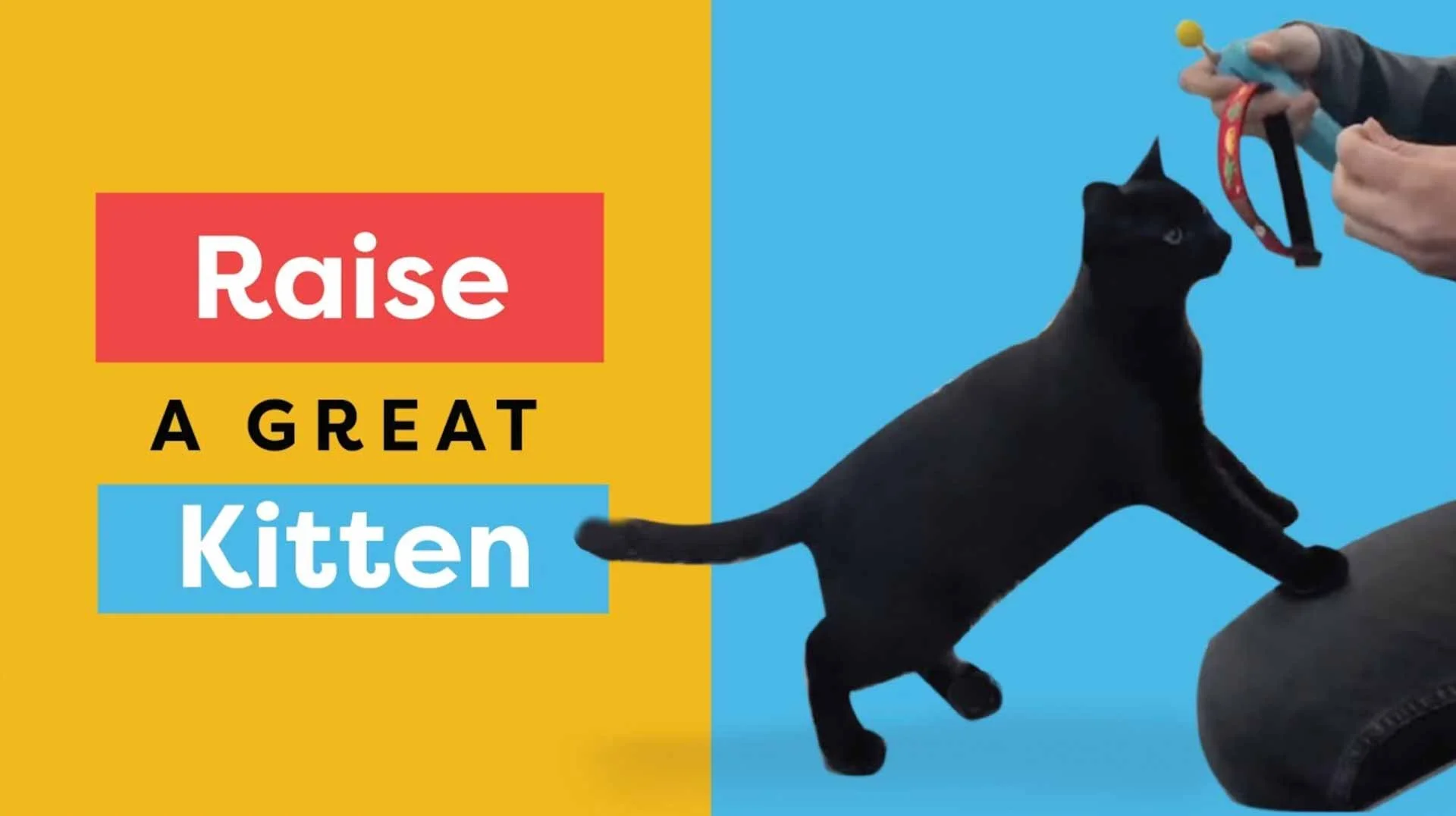
In this video, Julie walks through the exact foundations she focused on while helping two young kittens become more confident, social, and ready for adoption.
Prefer to watch the full lesson? Watch the video below.
Table of Contents
Before You Start Training Your Kitten
Before you make training a major focus, make sure your kitten is eating well, using the litter box consistently, and settling into their new environment.
If there are any health concerns, address those first. Kittens who don’t feel well are not in the best state to learn.
Once your kitten is healthy, safe, and comfortable, you can begin introducing simple training foundations in a positive, low-pressure way.

How Old Should Kittens Be Before You Start Training?
Kittens are learning from the moment they are born. They learn where food comes from, how to move toward warmth and safety, and how to respond to the world around them.
So the question is not whether kittens can learn. The real question is what you choose to teach first and how you introduce it.
Early kitten training is not about strict obedience. It is about building trust, confidence, and comfort with the experiences your kitten will encounter throughout life.
Foundation 1: Build Trust Through Food and Play
The first goal in kitten training is to build trust.
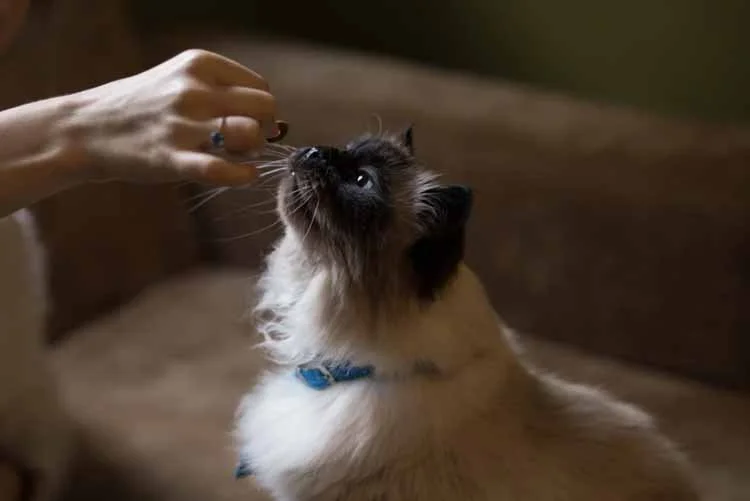
It is hard for a kitten to learn when they feel scared, unsure, or uncomfortable around people. A simple starting point is offering a little wet food on a spoon. This helps your kitten learn that good things happen when you are nearby.
If your kitten is fearful, place the food down and give them space. Over time, you can gradually decrease the distance until you are able to sit nearby, and eventually offer food from a spoon in your hand.
Play is another powerful way to build comfort. Interactive play helps your kitten get used to being near you, seeing your hands move around them, and learning that your presence predicts fun.
Once your kitten can comfortably eat from a spoon and confidently play with you, you have built an important foundation of trust.
Foundation 2: Help Your Kitten Get Comfortable with Handling
Many cats are sensitive about being touched in certain areas, especially their paws, belly, legs, or tail.
Early, positive exposure to gentle handling helps kittens learn that touch is safe and enjoyable, not something to avoid.
Start with easy areas like the back or shoulders. Pair gentle touch with your kitten’s favorite food so they begin to form a positive association.
The goal is to introduce touch gradually so your kitten notices the contact but does not feel the need to pull away. Over time, you can work toward more sensitive areas like the legs and paws.
This foundation will make grooming, brushing, nail trims, and vet handling much easier later on.
Foundation 3: Practice Being Picked Up
Many cats do not enjoy being picked up because it can make them feel unstable or vulnerable.
With early, positive experiences, you can help your kitten learn that being lifted is safe, brief, and rewarding.
Start close to the ground. Gently lift or move your kitten a very short distance, then reward them with a favorite treat. Keep the experience calm and easy.
The goal is not just for your kitten to tolerate being picked up. The goal is to help them feel safe and comfortable on your lap or in your arms.
When kittens learn this early, being handled and moved becomes much less stressful.
Foundation 4: Introduce Clicker Training
By around 12 weeks of age, kittens are highly capable of more structured learning.
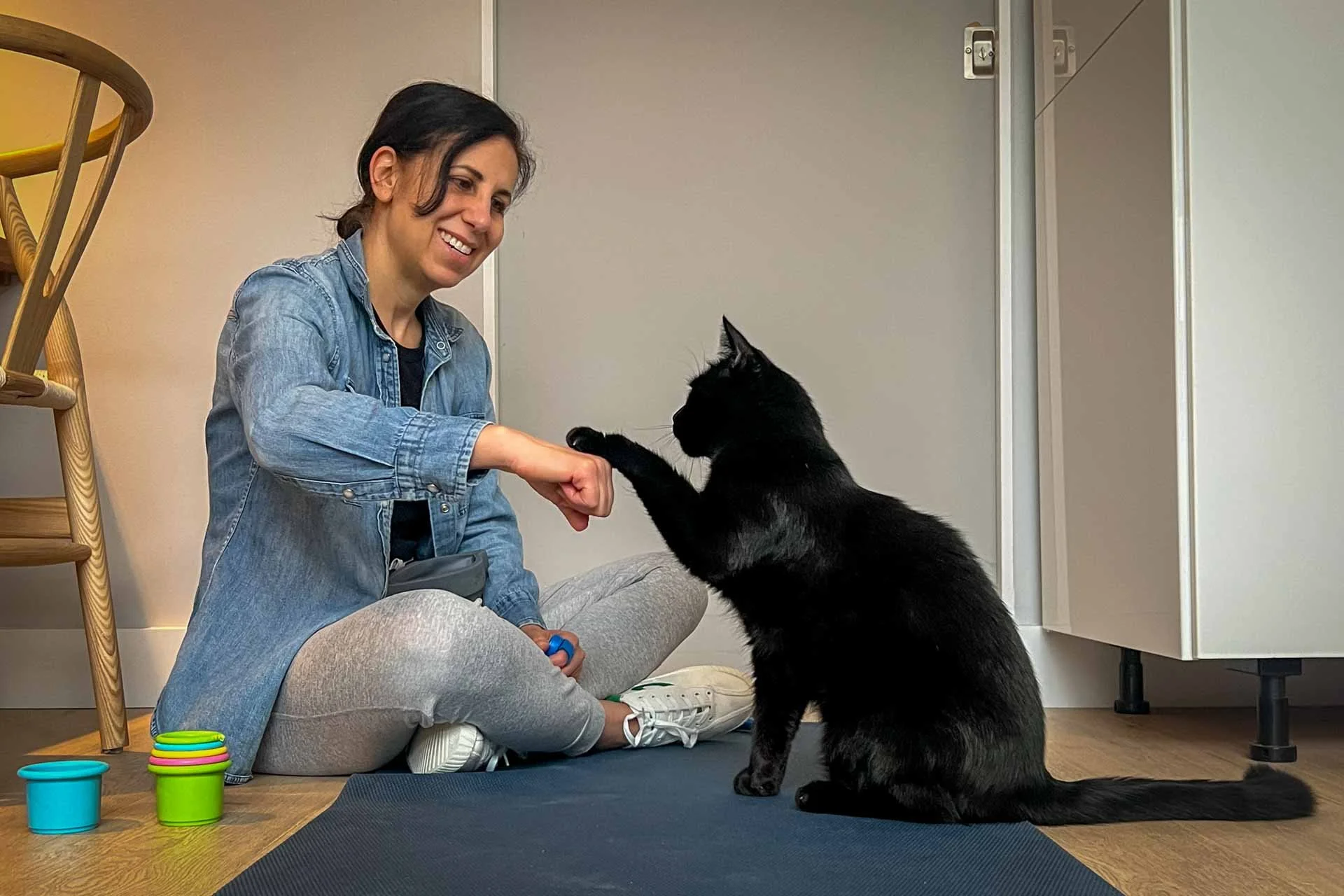
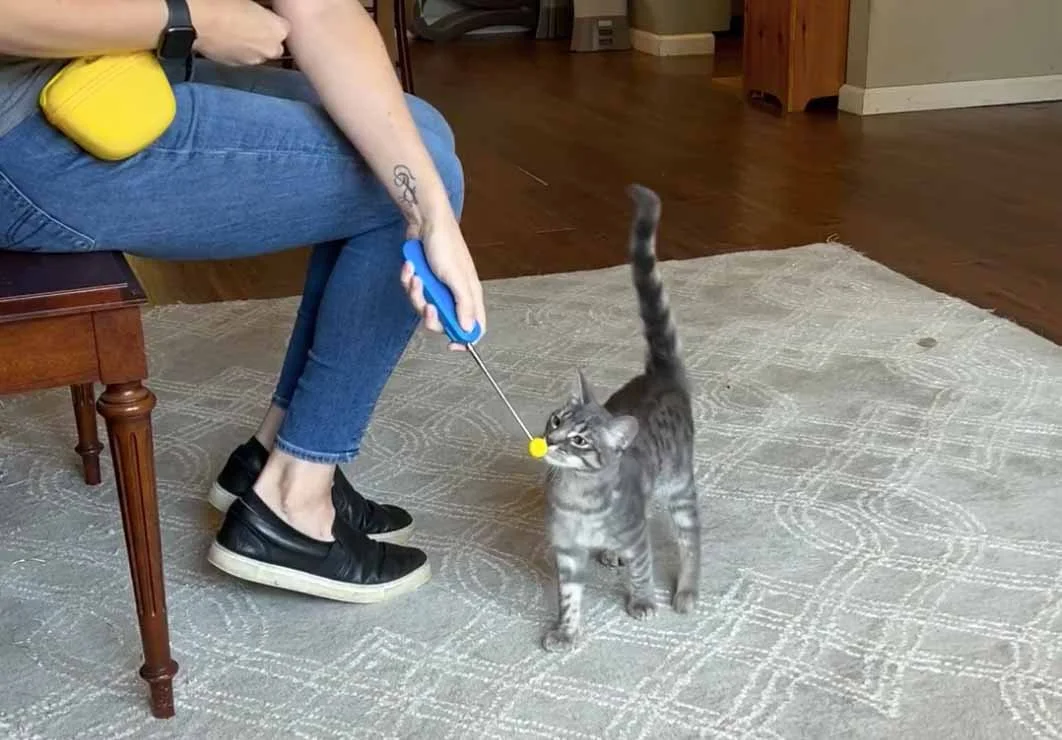
This is a great time to introduce simple clicker training skills, such as sitting or following a target stick.
The clicker tells your kitten:
“That exact behavior you just did when I clicked is what earned you a reward.”
That clear communication makes training easier and more fun. It helps your kitten understand what worked, build confidence, and learn new skills step by step.
A target stick is one of the best first training tools to introduce. Once your kitten learns to follow a target, you can use it to guide movement, teach tricks, help them get on and off surfaces, and even encourage them to go into a carrier.
To start, present the target stick to your kitten and wait for them to investigate. Click the moment they interact with it, then reward them.
Touching a target stick becomes a simple, engaging game that every kitten can learn.
Foundation 5: Start Cooperative Care Early
Many cats struggle with routine care, such as nail trims, brushing, or tooth brushing, because they were never gradually introduced to these experiences.
Without training, care procedures are often done through restraint, which can feel scary or overwhelming for the cat.
When kittens are introduced to cooperative care early, they can learn to become active, willing participants in their own care.
Start by introducing the tools your kitten will encounter later, such as brushes, nail clippers, toothbrushes, or grooming tools. Let your kitten see and investigate them, and pair the experience with treats.
Before moving forward, make sure your kitten is comfortable with gentle handling. Then begin with very small steps.
For nail trims, you might:
Introduce the clipper first
Practice briefly holding the paw
Touch the clipper gently to the nail
Gradually work up to trimming just the tiny tips of the nails
Each step should be paired with treats and easy successes.
Starting early helps set your kitten up for a lifetime of lower-stress, trust-based care.
Foundation 6: Introduce Carrier Training
Going to the vet is one of the most stressful experiences for many cats, and that stress often starts the moment the carrier comes out.
Carrier training works best when the carrier is introduced early and paired with positive experiences.
Start by making the carrier part of your kitten’s normal environment. Add food, treats, or play around the carrier so your kitten begins to associate it with good things.
From there, you can build in small steps, such as:
Encouraging your kitten to go inside voluntarily
Briefly closing the door
Lifting the carrier for a short moment
Gradually increasing duration or movement
A helpful way to gauge comfort is to watch what happens after each step. If your kitten stays relaxed and continues to anticipate rewards, you are likely moving at an appropriate pace.
Just a few minutes a day of carrier training can completely change how your kitten experiences vet visits and travel for life.
Foundation 7: Help Your Kitten Get Comfortable in the Car
Whether it is a move, a road trip, or a vet visit, most cats will need to travel in a vehicle at some point.
That is why introducing the car early is such a worthwhile project.
Start with short, positive sessions. You do not need to begin with a long drive. Your first goal is simply to help your kitten learn that the car is a safe, normal place.
Over time, you can pair the car with treats, calm attention, and very short trips. The goal is to make travel feel predictable and manageable instead of frightening.
If car comfort becomes part of your kitten’s regular routine early on, future travel can be much less stressful.
Foundation 8: Help Your Kitten Feel Comfortable with Strangers
It is common for cats to hide when visitors come over, but early social experiences can help prevent that response from becoming a habit.
Helping your kitten feel comfortable around new people makes everyday life easier. It can help with guests, pet sitters, family visits, and future care situations.
Start with short, positive introductions. Invite one person at a time and let your kitten set the pace.
Pair the visitor’s presence with something your kitten enjoys, such as treats, play, or gentle pats if your kitten is ready.
With repeated positive exposure, your kitten can learn that unfamiliar people are not something to fear. They can become a source of treats, play, and attention.
Foundation 9: Introduce Equipment for Safety and Travel
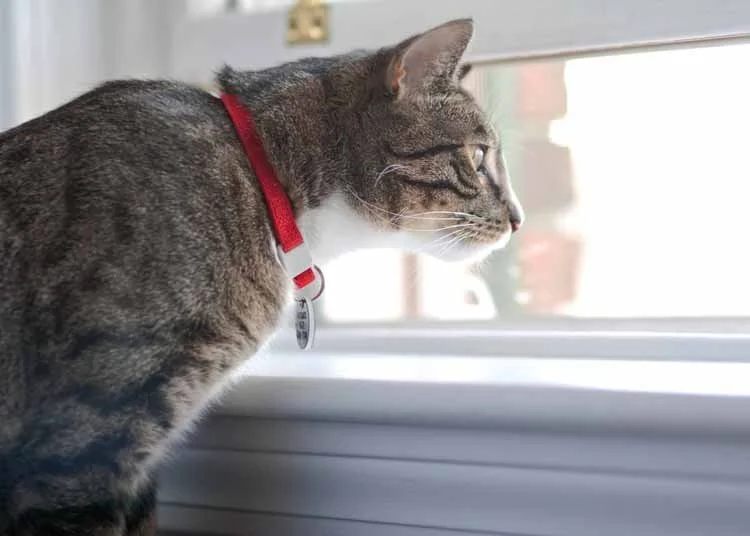
Traveling with cats is becoming more common. A confident cat who is comfortable wearing equipment, such as a collar or harness, is much easier to manage during trips, visits, or unexpected situations.
This type of training is also part of emergency preparedness. In situations like evacuations or sudden relocations, having a cat who is already comfortable with gear can make it easier to move them quickly and safely.
Equipment training also builds on broader handling skills. A kitten who is comfortable wearing a collar or harness is learning to accept touch around the neck, chest, and abdomen.
Start with simple, low-stress introductions. Pair the equipment with food and keep the steps small. For example, you might gently guide your kitten’s head through a harness while offering treats.
If your kitten is comfortable following a food lure, you can later use a target stick to build more active cooperation.
The goal is for your kitten to willingly participate in putting on equipment, making everyday handling, travel, and unexpected situations easier.
Final Thoughts
Indoor cats may live quiet, predictable lives most of the time, but vet visits, travel, moving, visitors, and new experiences are all part of life.
The more we gently expose kittens to these experiences while they are young, the more we set them up to become confident, well-adjusted companions.
Kitten training does not need to be complicated. Start with trust, keep sessions short, use positive reinforcement, and help your kitten learn that the world is safe, fun, and full of good things.
Want Help Training Your Kitten?
Inside Cat School, you’ll find step-by-step training plans for skills like clicker training, carrier training, cooperative care, leash walking, and more.
With just a few minutes a day, you can help your kitten build confidence, learn practical skills, and strengthen your bond from the very beginning.
[CTA button: Explore Cat School]
Kitten Training FAQs
-
Yes. Kittens are learning from the moment they are born. Training helps guide what they learn by using positive reinforcement, clear communication, and short, fun practice sessions.
-
Start with trust-building, gentle handling, food motivation, play, and simple confidence-building exercises. Once your kitten is comfortable, you can introduce clicker training, target training, carrier training, and cooperative care.
-
Many kittens can begin learning simple clicker training skills around 12 weeks of age, especially if they are healthy, settled, and motivated by food or play.
-
Keep training sessions short. A few minutes at a time is usually enough. The goal is to end while your kitten is still engaged and successful.
-
Carrier training helps reduce stress around vet visits, travel, and emergencies. When a kitten learns early that the carrier predicts treats, comfort, and safety, they are less likely to fear it later.
-
Harness training can be helpful for safe travel, outdoor enrichment, and emergency preparedness. Introduce equipment slowly and pair each step with treats so your kitten feels comfortable and willing to participate.